
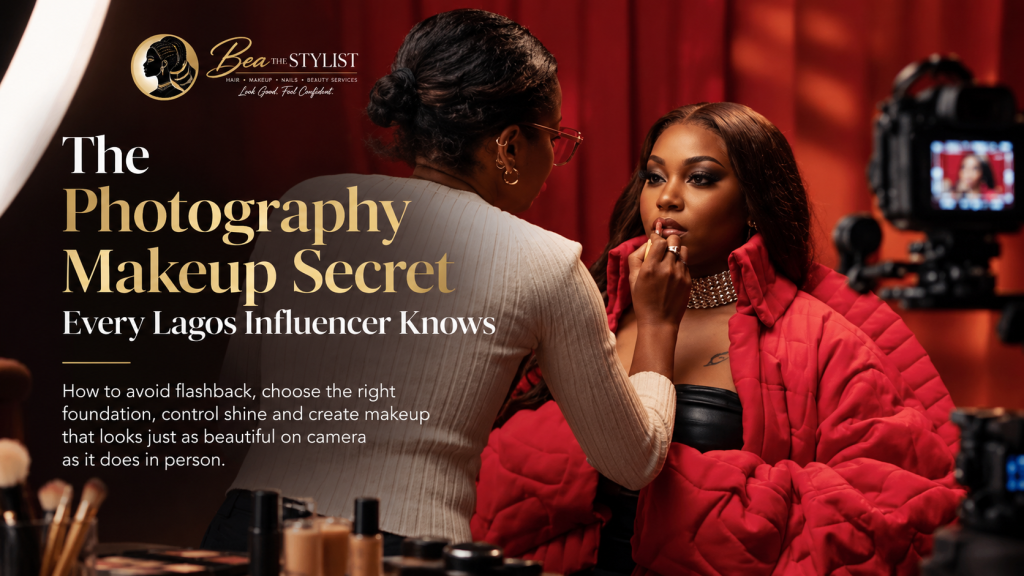
Have you ever finished your makeup, looked flawless in the mirror, then turned on your camera flash and suddenly looked ashy, grey or washed out?
You’re not imagining it.
Makeup that looks beautiful in person doesn’t always translate the same way on camera. Flash, studio lighting, camera exposure and even the finish of your foundation can change how your skin looks in photos and videos.
That’s why photography makeup requires a slightly different approach from your everyday makeup routine. Whether you’re getting ready for a photoshoot, creating social media content, attending an event or simply want your makeup to look better in pictures, a few small adjustments can make a big difference.
Here are a few photography makeup tips that can make a real difference on camera.
Be Careful With SPF in Your Makeup Base
SPF itself isn’t something you should simply skip as part of your everyday skincare routine. However, some sunscreen and makeup formulas containing mineral UV filters such as zinc oxide or titanium dioxide can contribute to a white or grey cast when photographed with flash.
If you’re preparing for professional photography, check how your sunscreen, foundation and setting powder perform under flash before the shoot. If possible, test your complete makeup look with the actual camera and lighting you’ll be using.
The goal isn’t to abandon sun protection. It’s to make sure your makeup base is camera-friendly and doesn’t create an unexpected cast when photographed.
Set Your Base Properly
A well-set base is one of the most important parts of makeup for photos.
After applying your foundation and concealer, use a suitable setting powder to control excess shine and help your makeup stay in place. You can apply a little more powder to areas that tend to crease or become oily, such as underneath the eyes, around the nose and across the centre of the face.
“Baking” — applying a more generous layer of loose powder and allowing it to sit briefly before dusting away the excess — can be useful for certain makeup looks, particularly when you need extra longevity.
But more powder isn’t automatically better. Too much can make the skin look heavy or dry on camera.
The goal is a smooth, even, well-set finish.
Match Your Foundation in Natural Light
This is one of the simplest ways to improve your makeup for photography.
Indoor lighting, warm bulbs and even ring lights can change how a foundation shade appears. A foundation that looks perfect in the salon mirror may reveal a different undertone once you’re outside or in front of a camera.
When choosing your foundation shade, check it in natural daylight whenever possible. Pay attention not just to whether the colour matches your face, but whether the undertone works with your neck and chest.
A good foundation match should look seamless both in person and on camera.
Add Enough Definition for the Camera
Cameras can reduce some of the natural dimension you see when looking at a face in person, particularly with flat or direct lighting.
That’s why contour and bronzer can be especially useful for photography makeup.
Rather than dramatically changing your face, add controlled definition underneath the cheekbones, around the jawline and, where appropriate, along the sides of the nose.
The key is blending.
You want the camera to capture the structure of your face without being able to see obvious contour lines.
Don’t Forget Your Blush
Blush is another step that can make a noticeable difference in photos.
Foundation and setting powder can sometimes make the face look flatter than it does in real life. A well-blended blush brings warmth and dimension back to the cheeks and helps prevent the complexion from looking washed out.
For photography, place and blend your blush according to the shape and style of the look you’re creating rather than simply applying more product.
Highlight Strategically
Highlighter can look beautiful in photographs — but placement matters.
Instead of covering the entire face in shimmer, concentrate your highlight on areas where light naturally catches, such as the tops of the cheekbones, brow bone and cupid’s bow.
For a more polished photography makeup look, choose a finely milled highlighter that catches light without creating large patches of glare.
If you’re shooting with strong flash or studio lighting, a subtle glow usually photographs more elegantly than an overly reflective finish.
Choose Your Finish Based on the Lighting
There’s no universal rule that says matte makeup is always better for photography.
The right finish depends on your skin, the type of photography and the lighting.
A matte or semi-matte base can be easier to control under bright lights because it reduces unwanted shine. A more luminous finish can look gorgeous in softer, natural lighting.
If you want glowing skin on camera, keep the glow intentional rather than applying shimmer or very reflective products everywhere.
Think radiant, not greasy.
Finish With Setting Spray
Once your makeup is complete, a good setting spray can help bring the different layers of your makeup together and improve longevity.
Mist it evenly over the face according to the product instructions and allow it to dry naturally.
This final step is particularly useful when you’re preparing for a long event, content shoot or photoshoot where you want your makeup to remain fresh throughout multiple photographs.
And if you’re shooting outdoors in Lagos, remember that heat and humidity can affect how makeup wears, so having your setting products and a few touch-up essentials nearby is always a good idea.
Why Photography Makeup Matters in Lagos
Lagos has its own beauty challenges when you’re getting camera-ready.
Outdoor shoots can mean heat and humidity, while indoor content can involve ring lights, studio lights and camera flashes. Each lighting environment can affect how your foundation, powder, contour and highlighter appear.
That’s why makeup for photoshoots in Lagos shouldn’t simply be your everyday makeup with a little extra product.
Your makeup should be considered alongside the lighting, camera, location, outfit and overall look you’re creating.
Getting Camera-Ready Without the Guesswork
Getting professional photography makeup right can take some trial and error.
A professional makeup artist can help you choose a foundation finish, create the right level of definition and adjust your makeup based on whether you’re shooting outdoors, in a studio, with flash or under continuous lighting.
At Bea The Stylist, we create polished makeup looks for photoshoots, events, content days and special occasions, with your overall look and setting in mind.
If you’re looking for a makeup artist in Ikeja or Lagos for your next photoshoot, event or content day, we’d love to help you get camera-ready.
Look flawless in person. Photograph beautifully on camera.
Contact Bea The Stylist
📞 +234 706 355 7355
📍 15 Amore Street, Off Toyin Street, Allen, Ikeja, Lagos
📸 Instagram: @beathestylist1
🌐 Book online: beathestylist.com.ng
Walk-ins are welcome, subject to availability.
Frequently Asked Questions
What causes flashback in makeup photography?
Flashback is a white, grey or unusually bright cast that can sometimes appear in photographs when certain makeup or skincare products interact with flash photography. Some formulas containing reflective mineral UV filters can contribute to the effect. Testing your complete makeup look with the camera and lighting you’ll be using is one of the best ways to identify potential flashback before an important shoot.
How do I stop my makeup from looking ashy in flash photos?
Start with a well-matched foundation and test your complete makeup look under the lighting you’ll be photographed in. Be mindful of highly reflective products, set areas that tend to become oily and avoid applying excessive powder. Taking a test photo with flash before the shoot can also help you spot anything that looks different on camera.
Do I need to contour differently for photos?
Your contour may need to be slightly more defined for certain types of photography because lighting and camera exposure can reduce facial dimension. The important thing is to build definition gradually and blend it well so your face still looks natural in person.
Is matte or dewy makeup better for photography?
It depends on the lighting and the look you’re going for. Matte and semi-matte finishes can help control shine under bright lighting, while a luminous finish can look beautiful in softer or natural light. For a polished photography makeup look, keep shine and highlighter intentional rather than overly reflective.
Where can I get professional photography makeup in Lagos?
Bea The Stylist offers professional makeup services for photoshoots, events, content creation and special occasions at our salon in Allen, Ikeja, Lagos.
How far in advance should I get my makeup done before a photoshoot?
Give yourself enough time for your makeup to be completed, set and checked before photography begins. Your exact timing will depend on the complexity of your makeup look and the shoot schedule. For professional shoots, it’s also helpful to allow time for final touch-ups before the first photographs are taken.